Panda Learn Chinese

Loading

Basic Rules of Hanyu Pinyin – Nouns

  1. Monosyllabic prefixes and suffixes are linked with nouns. Prefixes: fù- (vice), zǒng- (general/main/chief), fēi- (non), fǎn-[anti], chāo- (super/surpass), lǎo – (old/venerable), A – (marker of a nickname/endearment), (-ble), wú- (non), and so forth. Suffixes: -zǐ, -ér, -tóu (head, nominal ending), -xìng(nature), -zhě/yuán (-ist), -jiā (expert/-ist), -shǒu(hand/person/expert/-ist), -huà (-ized), men (-s/es), and so forth). For example:
    • fù-bùzhǎng (vice-director of a [government] department),
    • zǒng-gōngchéngshī (chief engineer),
    • yìshùjiā (artist [in general]).
  2. Nouns and the directional words/locations after them are separated.
    • mén wài (outside the door)=mén wàimian(/wàibiān/wàitou),
    • huǒchē shàngmian (on the train)

    The syllables of lexical items are linked.

    • hǎiwài (this means “overseas,” not “outside of the sea”)
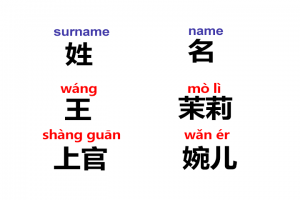
  3. Surnames and given names (xìngmíng/míngzi) are written separately in the Chinese Han language. The first letters of surnames and the given names are capitalized. Pen names (bǐmíng) and nicknames (biémíng) are written according to the same principles:
    • Wáng Jiànguó,
    • Dōngfāng Shuò,
    • Zhāng Sān

    A personal name and the person’s professional title are separated:

    • Wáng bùzhǎng,
    • Lǐ xiānsheng/xs

    The first letter of personal addresses such as Lǎo, Xiǎo, Dà, Ā, and so forth are capitalized. For example:

    • Xiǎo Liú (Little Liu),
    • Wú Lǎo (honorable Old Wu),
    • Sān (The Third [in a family])

    When the surname of historically well-known figures is combined with a respectful or descriptive term by which they are commonly known, the syllables are linked, and the first letter is capitalized. For example:

    • Kǒngzǐ (Confucius),
    • Bāogōng (Grand Judge Bao),
    • Xīshī (Beauty Xishi)
  4. Proper names and general names of places are separated and the first letter of each of the names is capitalized.
    • Běijīng Shì (Beijing City),
    • Dòngtíng Hú (Lake Dongting)

    The monosyllabic prefixes or suffixes of proper names and general names are linked. For examples:

    • Jǐngshān Hòujiē (Back Street of Jingshan),
    • Cháoyángménnèi Nánxiǎojiē (Southern Small Street Inside the Gate Facing the Sun)

    Link the syllables of established names for villages, towns, and other places when it is not necessary to distinguish whether they are proper names or general names (the first letter is capitalized). For example:

    • Wángcūn (Wang Village),
    • Zhōukǒudiàn (a place near Beijing where the fossilized remains of Peking Man were discovered),
    • Sāntányìnyuè (Moon Reflected in Three Ponds)
  5. Personal and place names not in the Chinese Han language, based on the principle of “according with the custom of the person in question (míng cóng zhǔrén),” are written either in the original language or transcribed in Roman letters. For example:
    • Einstein (Ài’īnsītǎn),
    • Ngapoi Ngawang Jigme (Āpèi Āwàng Jìnměi),
    • London (Lúndūn),
    • Washington (Huáshèngdùn)

    Foreign names transcribed in the Chinese Han language are written according to the pronunciation of the corresponding characters. For example:

    • Nánměi (South America),
    • Déguó (Germany),
    • Dōngnányà (Southeast Asia)

Basic Rules of Hanyu Pinyin – General rules

  1. Words are the basic units for spelling the Chinese Common Language.
    • rén (person/people),
    • péngyou (friend[s]),
    • túshūguǎn (library/libraries)
  2. Structures of two or three syllables that indicate a complete concept are linked:
    • quánguó (the whole nation),
    • duìbuqǐ (sorry),
    • qiūhǎitáng (begonia)
  3. Separate terms with more than 4 syllables if they can be separated into words, otherwise link all the syllables:
    • wúfèng gāngbǐ (seamless pen),
    • yánjiūshēngyuàn (graduate school),
    • jīngtǐguǎn gōnglǜ fàngdàqì (transistor power amplifier),
    • Hóngshízìhuì (Red Cross)
  4. Reduplicated monosyllabic words are linked, but reduplicated disyllabic words are separated:
    • rénrén (everybody),
    • chángshi chángshi (give it a try)

    Juxtaposed reduplications (AABB structures) are separated by a hyphen:

    • láilái-wǎngwǎng (come to and fro)
    • qīngqīng-chǔchǔ (be clearly)
  5. In certain situations, for the purpose of making it convenient to read and understand the words, a hyphen can be added:
    • huán-bǎo (environmental protection)
    • shíqī-bā suì (17 or 18 years old)
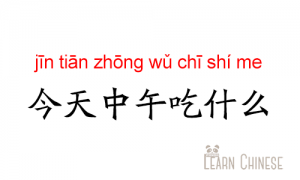
What we will eat in lunch? in Chinese

What we will eat in our lunch?

What we will eat in lunch? in Chinese jīn tiān zhōng wǔ chī shí me

今天中午吃什么

What we will eat in our lunch?

lǎo hǔ :hǎo è ,jīn tiān zhōng wǔ wǒ men chī shí me ?

老虎:好饿,今天中午我们吃什么?

xióng māo :wǒ zhǔ le yì dà lì miàn

熊猫:我煮了意大利面。

lǎo hǔ :shì fān qié wèi de ma ?

老虎:是番茄味的吗?

xióng māo :bù shì ,shì xiāng cài wèi dào de ,nǐ kě yǐ chī xiāng cài ma ?

熊猫:不是,是香菜味道的,你可以吃香菜吗?

lǎo hǔ :wǒ kě yǐ chī xiāng cài 。

老虎:我可以吃香菜。

xióng māo :tài hǎo lā !

熊猫:太好啦!

Pasta in Chinese

Tiger: So hungry, what I can eat?

Panda: I cooked pasta.

Tiger: tomato flavor is it?

Panda: No, coriander flavor, you can eat parsley do?

Tiger: I can eat parsley.

Panda: great!


Combinations of initials and finals

These are the syllables of Mandarin Chinese as shown in the combinations of initial and final sounds and as spelled in Hanyu Pinyin.

  b p m f d t n l g k h z c s zh ch sh r j q x
a ba pa ma fa da ta na la ga ka ha za ca sa zha cha sha a
o bo po mo fo o
e me de te ne le ge ke he ze ce se zhe che she re e
ai bai pai mai dai tai nai lai gai kai hai zai cai sai zhai chai shai ai
ei bei pei mei fei dei tei nei lei gei kei hei zei zhei shei ei
ao bao pao mao dao tao nao lao gao kao hao zao cao sao zhao chao shao rao ao
ou pou mou fou dou tou nou lou gou kou hou zou cou sou zhou chou shou rou ou
an ban pan man fan dan tan nan lan gan kan han zan can san zhan chan shan ran an
ang bang pang mang fang dang tang nang lang gang kang hang zang cang sang zhang chang shang rang ang
en ben pen men fen den nen gen ken hen zen cen sen zhen chen shen ren en
eng beng peng meng feng deng teng neng leng geng keng heng zeng ceng seng zheng cheng sheng reng eng
ong dong tong nong long gong kong hong zong cong song zhong chong rong
u bu pu mu fu du tu nu lu gu ku hu zu cu su zhu chu shu ru wu *
ua gua kua hua zhua chua shua rua wa *
uo duo tuo nuo luo guo kuo huo zuo cuo suo zhuo chuo shuo ruo wo *
uai guai kuai huai zhuai chuai shuai wai *
ui dui tui gui kui hui zui cui sui zhui chui shui rui wei * 1
uan duan tuan nuan luan guan kuan huan zuan cuan suan zhuan chuan shuan ruan wan *
uang guang kuang huang zhuang chuang shuang wang *
un dun tun nun lun gun kun hun zun cun sun zhun chun shun run wen * 2
ueng weng *
i bi pi mi di ti ni li zi † ci † si † zhi ‡ chi ‡ shi ‡ ri ‡ ji qi xi yi +
ia dia lia jia qia xia ya +
ie bie pie mie die tie nie lie jie qie xie ye +
iao biao piao miao diao tiao niao liao jiao qiao xiao yao +
iu miu diu niu liu jiu qiu xiu you + 3
ian bian pian mian dian tian nian lian jian qian xian yan +
iang niang liang jiang qiang xiang yang +
in bin pin min nin lin jin qin xin yin +
ing bing ping ming ding ting ning ling jing qing xing ying +
iong jiong qiong xiong yong +
ü ju ※ qu ※ xu ※ yu ※
üe nüe lüe jue ※ que ※ xue ※ yue ※
üan juan ※ quan ※ xuan ※ yuan ※
ün jun ※ qun ※ xun ※ yun ※

Notes:

  • Represents a zero initial (i.e. where nothing comes before the final sound in the far left column)
  • * Whenever u comes at the beginning of a syllable, it is written w. W, however, must not appear without an additional vowel, so u as a complete syllable is not written as w by itself but as wu.
  • The i in zi, ci, si is different from most other uses of i in that it is short, not long. It is represented in IPA by ɿ .
  • The i in zhi, chi, shi, ri is different from most other uses of i in that it is short, not long. It is represented in IPA by ʅ .
  • + Whenever i comes at the beginning of a syllable, it is written y. Thus, Y, however, must not appear without an additional vowel, so not y, yn, yng but yi,yin, ying.
  • Hanyu Pinyin simplifies the spellings of syllables with ü by using the u form instead in cases where no ambiguity could result. This is merely a spelling convention; the u‘s here are still pronounced ü.
  • 1 wei: ui is actually an abbreviation of uei. This is why Hanyu Pinyin uses, for example, shui, not shuei, and dui, not duei.
  • 2 wen: un is actually an abbreviation of uen.
  • 3 you: iu is acutally an abbreviation of iou. Thus, since i is written y at the beginning of a syllable, the spelling becomes you instead of yu (which would be not only misleading but wrong).
  • er has been omitted from this table.

 From – http://www.pinyin.info/

洪荒之力

xióng māo :lǎo hǔ ,nǐ zhī dào hóng huāng zhī lì ma ?

熊猫:老虎,你知道洪荒之力吗?

lǎo hǔ :jiù shì ào yùn huì fù yuán huì shuō de ma ?

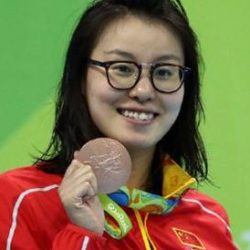
老虎:就是奥运会傅园慧说的吗?

xióng māo :duì ya !yǐn yòng tā de yuán huà :wǒ yǐ jīng ……yòng le hóng huāng zhī lì le !

熊猫:对呀!引用她的原话:我已经……用了洪荒之力了!

lǎo hǔ :dàn shì wǒ bù shì hěn míng bái ,hóng huāng zhī lì shì shí me yì sī ?

老:但是我不是很明白,洪荒之力是什么意思?

xióng māo :hóng huāng zhī lì zuì jìn shì chū xiàn zài yī bù diàn shì jù lǐ ,dàn shí jì shàng zhè shì yǐn yòng le wén yán wén 。

熊猫:洪荒之力最近是出现在一部电视剧里,但实际上这是引用了文言文。

Panda: Tiger, do you know prehistoric force it?

Tiger: is the Olympics Fuyuan Hui said?

Panda: Yes! Quote her exact words: I have used the power of …… prehistoric up!

Tiger: But I do not really understand the power of prehistoric mean?

Panda: prehistoric force recently appeared in a television show, but in fact this is a reference to the classical Chinese.

傅园慧记者:你用了58秒95(比赛)

Reporter: You took 58 seconds 95 (Event)

傅园慧:“58秒95?”
“58,95 ? ! ”


记者:你都没想到自己这么快?

Reporter: You did not think of yourself so quickly?

傅园慧:啊?我以为是59秒。我有这么快?我很满意!

I thought I did 59 seconds! Am I that fast? I am very pleased!


记者:对今天这个状态,有所保留吗?

Reporter: Today this state, you have reservations?

傅园慧:“没有保留,我已经……我已经……用了洪荒之力了!”
“I wasn’t holding back, I have given my full play!”


记者:2016年的你的身体状况不是很好,走到这一步非常难是吗?

Reporter: 2016 your physical condition is not very good, very hard to come this far is it?

傅园慧:已经是历史上最好的成绩了。我用了三个月做了这样的恢复,鬼知道我经历了什么,真的太辛苦了,有的时候感觉我已经要死了,奥运会训练真的生不如死。”
“It took me three months to get back to this level, you have no idea what I’ve been through. It was tough like hell. Sometimes I felt I couldn’t survive this. Training for the Olympics was killing.”

记者:你是不是对明天的决赛充满希望?

Reporter: Are you excited for tomorrow’s final?

傅园慧:“没有,我已经很满足了。”
“Not at all! I am already very pleased!”

A new Internet meme has emerged after Chinese swimmer Fu Yuanhui reacted exaggeratedly to her personal best performance in Rio 2016 women’s backstroke semi-final. “I’ve been utilizing prehistorical powers.” she told CCTV reporter. Her comment has also become part of the meme.

My Chinese Name is?

lǎo hǔ :xióng māo ,néng bāng wǒ qǐ yī gè zhōng wén míng ma ?

老虎:熊猫,能帮我起一个中文名吗?

老虎:熊貓,能幫我起一個中文名嗎?

xióng māo :hǎo de ,dàn shì zhōng wén míng hěn yǒu xué wèn ,xiān tīng wǒ jiǎng jiǎng hǎo ma ?

熊猫:好的,但是中文名很有学问,先听我讲讲好吗?

熊貓:好的,但是中文名很有學問,先聽我講講好嗎?

lǎo hǔ :hǎo de 。qǐng shuō 。

老虎:好的。请说。

老虎:好的。請說。

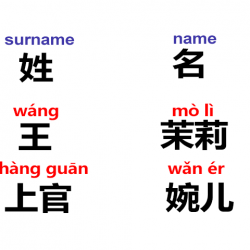
xióng māo :měi gè rén de zhōng wén míng dōu yǒu yì yì ,yī bān qíng kuàng xià ,shì fù qīn de xìng zài dì yī wèi ,jiē xià lái shì zì jǐ de míng zì 。zhōng wén míng de zhǎng dù yī bān shì 2-4gè hàn zì ,yǒu xiē rén de xìng shì fù xìng ,dà bù fèn rén què zhī yǒu yī gè hàn zì zuò wéi xìng 。

熊猫:每个人的中文名都有意义,一般情况下,是父亲的姓在第一位,接下来是自己的名字。中文名的长度一般是2-4个汉字,有些人的姓是复姓,大部分人却只有一个汉字作为姓。

熊貓:每個人的中文名都有意義,一般情況下,是父親的姓在第一位,接下來是自己的名字。中文名的長度一般是2-4個漢字,有些人的姓是複姓,大部分人卻只有一個漢字作爲姓。

Chinese name example

Tiger: panda, help me to make a Chinese name for me.
Panda: Sure, but the Chinese name system is a little complex, let’s learn together, okay?
Tiger: All right. Please.
Panda: Everyone has a sense of Chinese names, under normal circumstances, is the father’s name in the first place, followed by his name. Chinese name length is typically2-4 characters, some people last name is hyphenated, but most people only as a Chinese surname.


How to Spell Your Name in Chinese?

It is popular to use Chinese symbols as tattoos and as some artistic elements. However, it is difficult to understand what the characters exactly mean. If you want to put your name into characters, you will need to research Chinese symbols.

Now Chinese is more and more popular language learning in this world. So many friends asked me how to spell their names by Chinese. In fact we can use two ways to do it, firstly “Direct translation”, secondly do a new Chinese name.

Example: Andrew

lì rú :ān dé lǔ

例如:安德鲁

If you use direct translation then locals will know you are not Chinese so clearly. So how to hide by a Chinese name. I recommend you to create a new Chinese name.

Example: Andrew

例如:安建国

lì rú :ān jiàn guó

What is the meaning of  jiàn guó (建国)? You may ask me. I will tell you, we really love to use phrase of country, or China. I will give a list:

致远 – zhì yuǎn -Zhiyuan (from Zhuge Liang’s “commandment child book”: “non-indifferent to Ming, non-quiet no to Zhiyuan”)
俊驰 – Chun Chi (from idiom: Jun only star Chi)
雨泽 – Rain Ze (as much grace, like rain)
烨磊 – Ye Lei (honorable)
晟睿 – Sheng Rui ( “Sheng” is a bright, thriving meaning, read shèng; “Core” is the meaning of wisdom)
天佑 – God Bless (born blessed child)
文昊 – Wen Hao (Hao word meaning is: the majority of boundless)
修洁 – Repair Jie (Amendment: describe the tall slender tall, clean: clean)
黎昕 – Li Xin (Li: Dawn Xin: bright appearance)
远航 – Voyage (a good man, just let him go sailing right)
旭尧 – Xu Yao (Asahi: Sun Yao: The wise monarch in ancient times, the latter refers to saints)
鸿涛 – Hongtao (Hong: strong, prosperous)


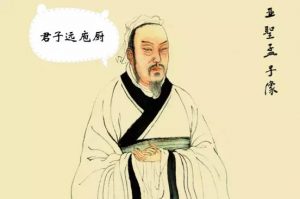
Mencius - a gentleman far Paochu

君子远庖厨

孟子-君子远庖厨
孟子-君子远庖厨

jun1 zǐ zhī yú qín shòu yě ,jiàn qí shēng ,bù rěn jiàn qí sǐ ;wén qí shēng ,bù rěn shí qí ròu 。shì yǐ jun1 zǐ yuǎn páo chú yě 。

君子之于禽兽也,见其生,不忍见其死;闻其声,不忍食其肉。是以君子远庖厨也。

Gentleman for animals, happy to see them alive, they could not bear to their death; hear them whine, they can not bear to eat their meat. Therefore, a gentleman always away from the kitchen.


Verified by MonsterInsights